
0.00€
CheckoutWhy Manure Kills Hydrangeas: Common Mistakes and How to Save Your Plants
Hydrangeas and Manure: A Gardener's Fatal Mistake
At spring and summer fairs, we constantly hear the same question. Customers ask if they can fertilize hydrangeas with manure. The answer is always the same and very straightforward: no, under no circumstances. Forget about any manure, whether it is cow, horse, chicken, or rabbit. This rule applies to absolutely all forms of it.
To understand the reasons for this incompatibility, let's dive a little into the biology of the plant.
A Blow to Soil Acidity and Iron Chlorosis
Hydrangeas love an acidic environment. They grow perfectly at a pH of 5 to 6.5. Regular potting soil (must muld) sold in garden stores often has an acidity of around 6. You can safely plant hydrangeas in such soil. But as soon as you add manure or ash to the soil, a sharp alkalization occurs.
For clarity: soil with a pH of 7 is a hundred times more alkaline than soil with a pH of 5. Here is what happens with such a spike in acidity:
- Iron block. Divalent iron in the soil oxidizes, turns into a trivalent form, and becomes unavailable to the roots.
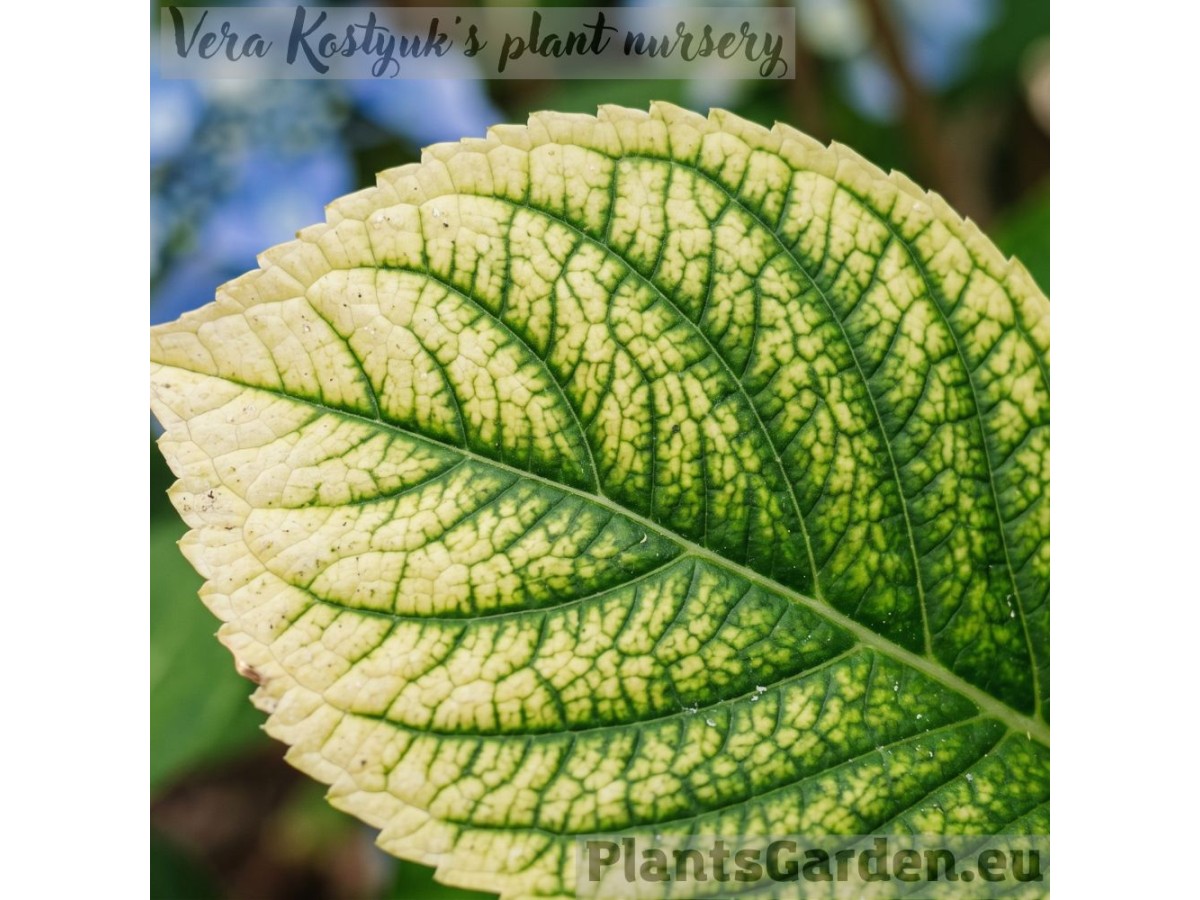
- Chlorosis development. The hydrangea develops iron chlorosis. Leaves shrink, turn yellow and light, while the veins remain green.
- Necrosis and branch death. In severe cases, entire shoots die off. Gardeners often confuse these symptoms with sunburn when they see dry leaf edges.
Bringing a plant back to life after this is difficult. You will need to spray the bush with iron chelate on the leaves and add granulated sulfur to acidify the soil. This takes a lot of time and effort.
Goodbye, Blue Flowers
If you grow macrophylla (bigleaf) or serrata hydrangeas for their beautiful blue color, manure will be your main problem. The blue color comes from aluminum. This element is absorbed by the plant only in a very acidic environment at a pH of 5 to 5.5. The alkaline reaction from manure completely blocks access to aluminum, and the flowers will lose their unique color.
Salt Stress: How the Plant Loses Moisture
Besides changing acidity, organic matter introduces a massive amount of salts into the soil. This is fatal for hydrangeas.
According to the laws of biology, the salt balance of the soil must be lower than in the root cells. This allows water to be absorbed freely, creating pressure and filling the stems with moisture. When there are too many salts in the ground, the process breaks down:
- Cell pressure drops, and the bush can no longer drink water.
- Marginal necrosis begins. The edges of the leaves dry out and look as if they have been burned.
- The plant sheds old foliage, trying to save the remaining moisture for survival.
- New shoots wilt quickly.
- The root system degrades. The white roots darken, turn brown, and die off.
Excess Nitrogen Robs You of Flowers
Fresh manure contains an uncontrollable amount of nitrogen. If you give it to a hydrangea, its internal balance will be disrupted. The bush will start aggressively growing green mass, and the blooming function will be suppressed. You will get a huge green bush without a single bud.
Another hidden threat lies in winter preparation. Thick green shoots, forced by excess nitrogen, simply do not have time to become woody by autumn. When the frost hits, these branches die, which critically affects the survival of the whole plant.
How to Properly Feed and Plant Hydrangeas
For your bushes to please you with health and lush flower caps, abandon folk experiments and follow simple rules:
- Choose the right soil. Plant hydrangeas in acidic peat or regular soil with a pH of up to 6.5.
- Acidify naturally. Use pine needles or pine bark mulch.
- Use mineral fertilizers. Buy specialized complexes for hydrangeas; they contain the necessary microelements in precise proportions.
Share this article with your gardening friends. Proper agricultural techniques will save your nerves and help you grow a truly luxurious garden.
07/07/2026 21:03:45
Comments:0
Views:1277
Comments