Robinia pseudoacacia
Size: 1.L
Frost resistance: 4-5 (-26°C)
Description:
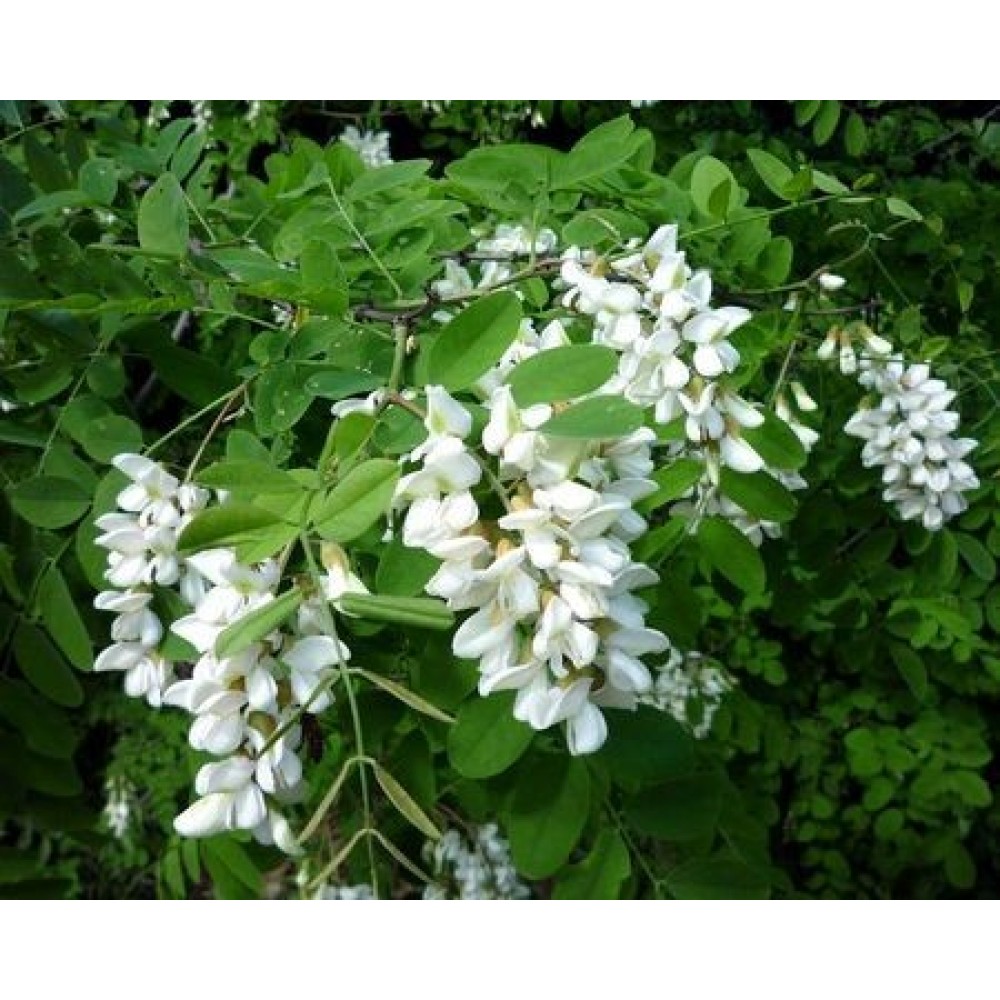
Black locust (Robinia pseudoacacia), known as “white acacia,” is a fast-growing, light-loving and drought-tolerant deciduous tree reaching 15–35 meters in height (Fabaceae family). It has fragrant white flowers, an ажourous crown and very durable wood. The species is characterized by a high nitrogen-fixing capacity, improves soil conditions, and is used in landscaping and as a honey plant, but it often forms dense suckers. Morphological description: Crown and trunk: The crown is spreading and ажourous. The bark is gray-brown with deep longitudinal cracks. Leaves: Compound (10–45 cm). Flowers: White to creamy, very fragrant, arranged in drooping racemes 10–25 cm long. Thorns: Paired thorns are present on the shoots. Fruits: Flat, dark brown pods 5–12 cm long, ripening in autumn and often remaining on the tree in winter. Growth characteristics and requirements: Soil: Undemanding, grows on poor, sandy and dry soils, but does not tolerate waterlogging. Light/heat: Light- and heat-loving, drought-tolerant. Root system: Powerful, shallow-to-deep, forming root suckers. Winter hardiness: Relatively high, tolerates frost down to (–25 to –40 °C) (depending on age and conditions), but young shoots may be damaged in severe winters. Uses: Landscaping: Used for avenues, parks and urban greenery due to its resistance to gas and smoke. Honey plant: An excellent honey plant (acacia honey). Soil stabilization: Ideal for strengthening ravines, slopes and sandy areas. Wood: Very strong and durable. Important: All parts of robinia except the flowers contain toxic alkaloids; therefore, caution is required when handling the plant, especially the bark and leaves. The plant may be invasive.
There are no reviews for this product.